
When choosing metal staircase it is important to think about staircase design and material. Whether you prefer oak, marble or fully metal finish, structure gives you the freedom to design the stairs exactly as you imagine.
Here’s everything you need to know about the metal staircase.
Metal Staircase Works in Every Home
Exposed steel and dark finishes suit industrial interiors, but metal is far more versatile than that. Slim spindles can make a narrow hallway feel lighter, polished stainless steel looks superb next to clear glass, and ornamental ironwork suits traditional properties where craftsmanship matters more than minimalism.
You also have a choice over how much metal to use. Some homes suit a full steel structure, while others only need a metal balustrade or a slim handrail alongside warm timber. Start with the look you want to achieve and choose the materials to match.
A Clean, Contemporary Look
Modern designs rely on simplicity. Straight balusters, even gaps and neat connections let the proportions of the staircase do the talking. Black and charcoal powder coatings are popular because they add definition without the reflection of polished metal, while softer neutrals can make the same design feel less severe.
The structure itself can become a feature. A central steel spine creates a bold line, and concealed supports help to achieve the look of floating stairs. As the style is so minimal, every joint needs to be detailed carefully.
Choosing the Right Metal and Finish
Stainless steel gives a clean, precise appearance and can be polished for a stronger shine or brushed for a softer finish. Powder-coated steel is available in a wide range of colours, making it easy to coordinate with window frames, radiators and door handles. Chrome details add bright highlights, while painted finishes offer extra flexibility for period homes.
Metal and wood complement each other well. Steel provides slim lines and precision, while timber adds grain, warmth and a comfortable surface underfoot. Oak treads on a dark steel spine are a popular combination, and you can personalise it through the type of wood, tread thickness and finish. Lighter timber feels airy, whereas darker tones create richer contrast.
The balustrade is often the most noticeable part of a metal staircase. Vertical spindles draw the eye upwards and suit most homes, curves add movement, and a mix of plain and decorative bars adds interest without too much detail.
Scale is important. Fine spindles can look lost next to heavy newels, while thick bars can make a narrow hallway feel enclosed. The spacing must also meet building regulations, so the design needs to balance safety and style.
Staircase – Comfort and Maintenance
Stainless steel gives a clean, precise appearance and can be polished for a stronger shine or brushed for a softer finish. Powder-coated steel is available in a wide range of colours, making it easy to coordinate with window frames, radiators and door handles. Chrome details add bright highlights, while painted finishes offer extra flexibility for period homes
Work closely with a staircase specialist to learn more about the possibilities available when taking on a home renovation project.
Get expert advice from a staircase design team
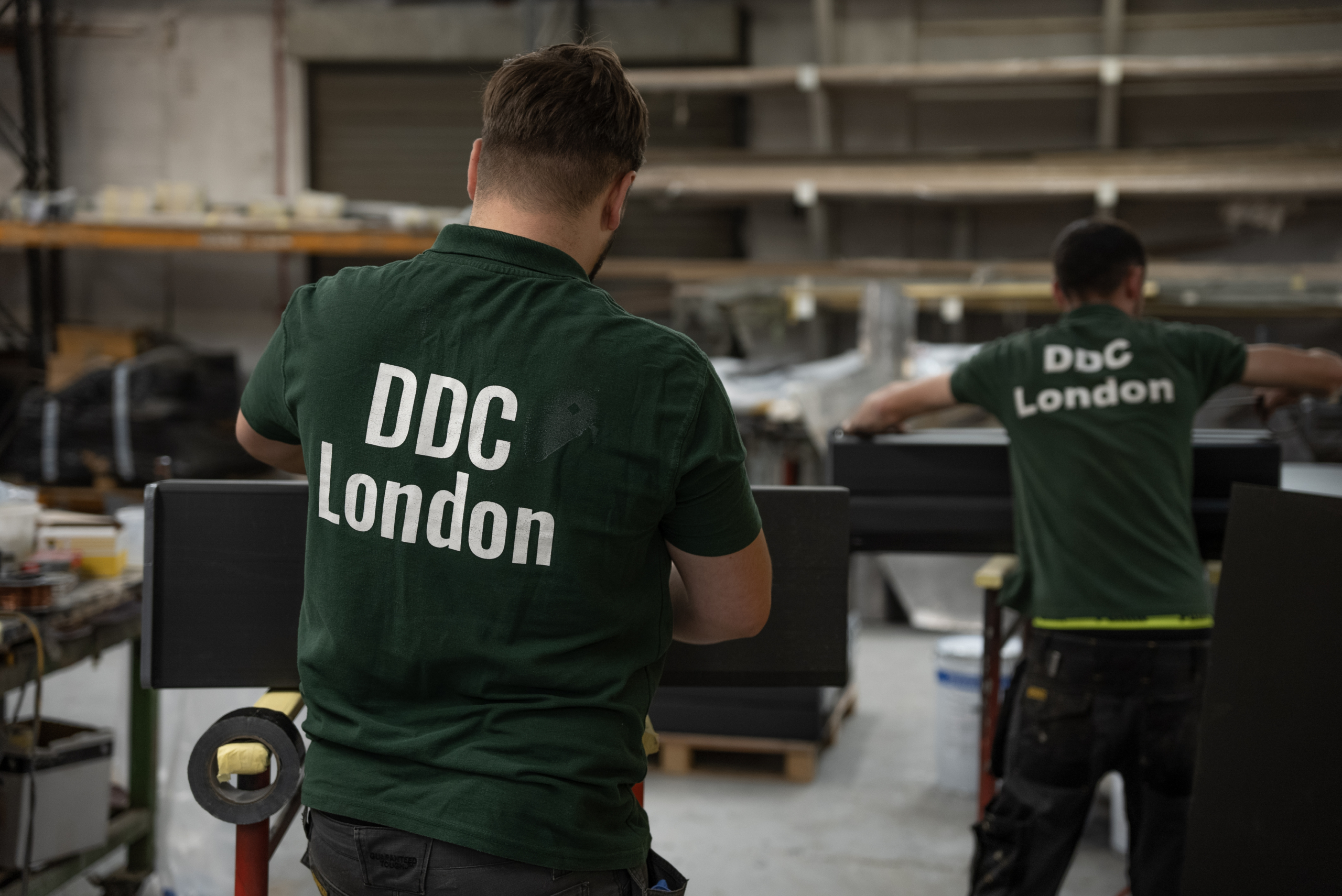
Are you designing a new staircase? If you’d like to start your project, get in touch with DDC London for a free consultation about your needs. We offer our professional staircase services across the South East of England, including Berkshire, Buckinghamshire and London.
For expert advice about staircase sizing or any other queries, please get in touch.